

What Patients Should Expect When Getting a Defibrillator Implant
 When a doctor first brings up a defibrillator, most patients have the same reaction. They picture something dramatic, wires and machines, an emergency room scene. The reality is a lot quieter than that. And once you understand the steps involved, the whole idea tends to feel a bit more manageable.
We put this together because, as an expert electrophysiologist in Los Angeles, we walk patients through this exact process almost every week. The questions rarely change. And honestly, that tells us most people just need someone to slow down and explain it clearly.
What An Implantable Defibrillator Actually Does
An implantable cardioverter defibrillator, or ICD, is a small device placed under the skin that watches your heart rhythm around the clock. If it detects a dangerously fast rhythm coming from the heart’s lower chambers, it delivers a shock or a series of paced beats to bring the rhythm back to normal.
It is not the same as a pacemaker, though the two are sometimes combined in one device. A pacemaker speeds up a heart that is beating too slowly, while an ICD is built to stop a rhythm that has become life-threatening.
Most people who need one have a history of ventricular tachycardia, a fast rhythm from the lower chambers, or they carry a diagnosed risk factor that makes sudden cardiac arrest more likely. We look at your heart’s structure, your prior rhythm history, and sometimes genetic or family factors before recommending this step. It is never a decision made from a single test result.
How We Decide If You Actually Need One
Not every patient with an irregular heartbeat needs an ICD, and this is one of the first things we sort out. We review your echocardiogram results, any prior arrhythmia episodes, and your overall heart function, usually measured by something called ejection fraction, the percentage of blood the heart pumps out with each beat. A lower-than-normal ejection fraction combined with a history of dangerous rhythms is one of the clearer signals that a device makes sense.
Some patients come to us already carrying a recommendation from another physician and want a second opinion before committing. That is a completely reasonable thing to ask for, and we welcome it. A full review of your records sometimes confirms the original plan, and sometimes it changes the picture entirely.
 The Day Of The Procedure
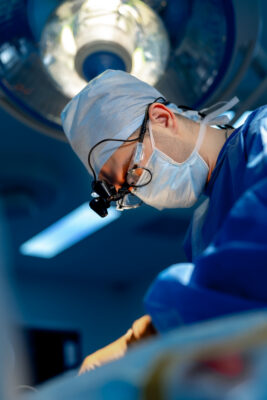
The implant itself is done in a controlled setting with local anesthesia and light sedation, so you are comfortable but not fully under general anesthesia in most cases. A small incision is made near the collarbone, and thin wires called leads are guided through a vein into the heart, where they connect to the device. The device itself sits just under the skin, usually small enough that it is barely noticeable once the site heals.
Patients are often surprised by how short the appointment feels from their side. Much of the actual working time is spent on precise placement and testing the device’s response, not on anything visibly complicated to the patient lying on the table.
The First Days After Your Implant
Some soreness around the incision site is normal for the first week or so, along with mild bruising. We ask patients to avoid raising the arm on that side above shoulder height for a period of time while the leads settle into position, since early movement can shift them before the tissue heals around them.
Most people are back to light daily activity within a few days, though anything involving heavy lifting or vigorous arm movement needs to wait longer. We schedule a follow-up visit to check the incision and confirm the device is reading correctly, and this is also when we answer any questions that came up once you were home and had time to think it through.
Living With The Device Day To Day
Life with an ICD looks close to normal for the overwhelming majority of patients. Airport security scanners and most household electronics are not a concern, though we go over a short list of things to be mindful of, such as keeping cell phones a reasonable distance from the device and mentioning it before any MRI or major medical procedure.
Device checks happen on a regular schedule, and many can be done remotely without an office visit, which lets us monitor battery status and rhythm history without disrupting your week. If the device ever delivers a shock, that is something to report to us right away, since it helps us understand what triggered it and whether any adjustment is needed.
Questions We Hear Most Often
Will I feel the device working?
Most of the time, no. The device monitors continuously in the background, and you will not notice anything unless it needs to deliver a shock, which is uncommon for most patients.
How long does the device last?
Battery life varies by device type and how often it is used, and we go over the expected range for your specific device at your evaluation rather than quoting a single number for every patient.
Can I still exercise?
Yes, in most cases, once you have healed from the implant and we have cleared you. We tailor activity guidance to your specific heart condition rather than applying a blanket rule.
Is the procedure reversible if my situation changes?
The device can be removed or replaced if your clinical picture changes, though this is handled carefully given the leads are positioned inside the heart.
Contact Us
At CEPI, we’re always here to assist you. Whether you have questions about our services, need to schedule an appointment, or would like to learn more about cardiac electrophysiology, our team is here to help.
Office Location: 8631 West 3rd Street #710E, Los Angeles, CA 90048
Phone: (310) 746-5335
Office Hours:
- Monday to Friday: 8:00 AM–5:00 PM
Get in touch today! Prefer to reach out online? Fill out our contact form, and a member of our team will get back to you promptly.
Related Topics: