

Managing Atrial Fibrillation Episodes in Patients with Heart Devices

The overlap of atrial fibrillation (AFib) and cardiac devices in a patient’s treatment plan is common. People looking for reliable heart rhythm services often have queries regarding how these disorders affect one another while working with a competent electrophysiology staff. Some people already have a pacemaker or implanted cardioverter-defibrillator (ICD) before they develop AFib, and some need a device later, as their heart care needs alter. In any case, the treatment has to take into account the rhythm disorder and the device to allow good long term management.At the Cardiac Electrophysiology Institute (CEPI), we routinely care for individuals with AFib who also have cardiac devices. Understanding how your device works with your cardiac rhythm disorder can lead to meaningful conversations about treatment options, monitoring and continuing care.
Why AFib and Heart Devices Often Coexist
AFib is the most common sustained arrhythmia in adults. It involves disorganized electrical activity in the upper chambers of the heart, which produces an irregular heartbeat and raises stroke risk approximately five times compared to people without the condition. Over time, if AFib is poorly controlled, it can weaken the heart muscle, a condition called tachycardia-induced cardiomyopathy.
A weakened heart muscle sometimes requires a device. Patients with heart failure may need a cardiac resynchronization therapy device (CRT or CRT-D) to improve the heart’s pumping coordination. Patients with a history of dangerous fast rhythms in the lower chambers, such as ventricular tachycardia (VT), may need an ICD. Some of those same patients also have AFib, either as a contributing condition or as something that develops separately over time. The result is that a notable number of people living with a pacemaker or ICD also experience AFib episodes.
How Pacemakers and ICDs Respond to AFib
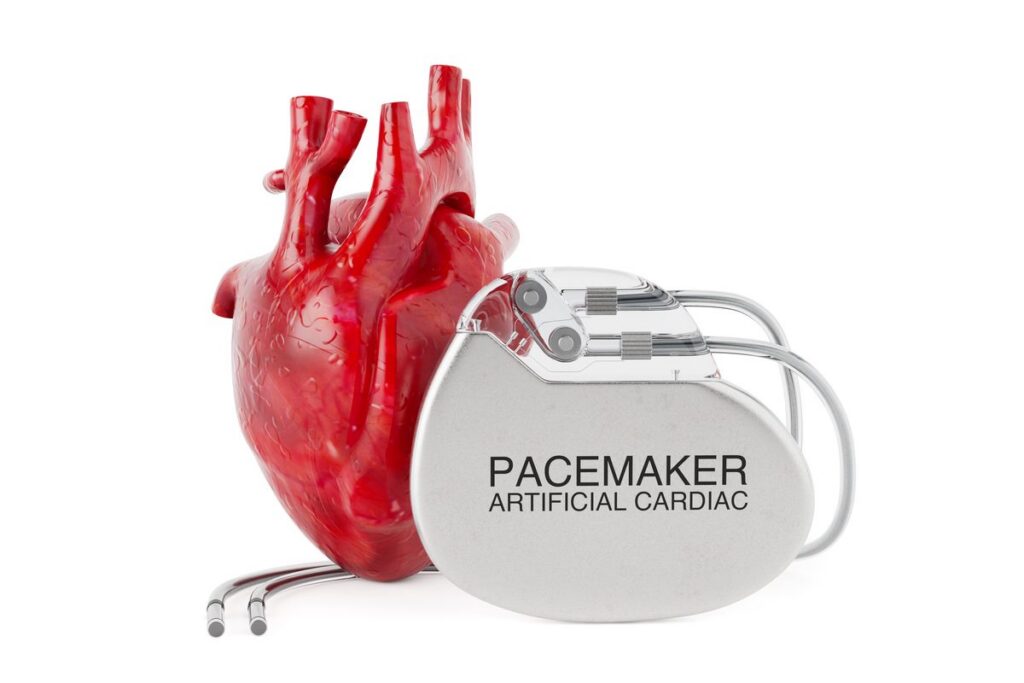
Pacemakers are designed to address slow heart rhythms. During an AFib episode, when the heart rate is fast and irregular, most pacemakers step back and allow the heart to beat on its own, since the rate exceeds the device’s lower threshold. The pacemaker is not designed to stop AFib, and it does not deliver shocks to terminate it.
What pacemakers do during AFib is detect it. Modern devices record episodes of fast atrial activity, which our team reviews during device checks or through remote monitoring. This detection gives us a clearer picture of how often AFib is occurring and for how long, even in patients who do not feel every episode.
ICDs function differently. They are designed to detect and treat life-threatening fast rhythms from the lower chambers, specifically ventricular fibrillation and sustained ventricular tachycardia. During an AFib episode with a fast ventricular rate, there is a risk the ICD may misidentify the rapid irregular rhythm as a ventricular arrhythmia and deliver an inappropriate shock. This is a well-recognized challenge in device management, and programming adjustments can significantly reduce that risk. Reviewing whether current settings remain appropriate as a patient’s condition changes is a standard part of ongoing device follow-up.
What Patients with Devices Should Watch For During AFib Episodes
Patients who have a cardiac device and experience AFib should pay attention to how their episodes change over time. A few things are worth noting and reporting.
If AFib episodes feel different than they did before, last longer, or come more frequently, that change is worth bringing up at your next appointment. It may signal that the AFib has progressed from paroxysmal (starts and stops on its own) to persistent (requires treatment to terminate).
If you receive an ICD shock, contact our office promptly regardless of whether you feel fine afterward. Every shock should be reviewed to determine whether it was appropriate and whether device programming needs adjustment. Increased fatigue, shortness of breath, or leg swelling during AFib episodes may also indicate the arrhythmia is affecting your heart function more than it was before, which is worth evaluating.
Medication Management for AFib in Device Patients
Medication for AFib in a patient with a cardiac device follows the same broad categories as in other patients: rate control, rhythm control, and anticoagulation. Device patients often have additional considerations, though.
Rate-control medications such as beta-blockers or calcium channel blockers slow the ventricular response during AFib. For patients who already have a pacemaker, some of these medications need to be used carefully because they can slow the heart rate below the pacemaker’s lower threshold, which changes how the device responds.
Rhythm-control medications, or antiarrhythmic drugs, aim to keep the heart in normal sinus rhythm. Some antiarrhythmics interact with device function and require dose review when a device is present. Anticoagulation is managed based on stroke risk, not based on whether the patient has a device. The CHA2DS2-VASc score is used to assess that risk individually.
When a Device Upgrade or Adjustment May Be Needed
AFib can shift the picture for a patient who already has a device, and that shift sometimes means the original device is no longer the right fit for the current clinical situation. A few scenarios where this comes up:
A patient with a pacemaker for bradycardia who develops persistent AFib and progressive heart failure may need an upgrade to a CRT or CRT-D device. These devices address the coordination problem in the lower chambers that can worsen with both AFib and heart failure.
A patient with an ICD whose AFib is becoming more frequent may need device reprogramming to reduce the risk of inappropriate shocks. In some cases, adding an atrial lead changes how the device distinguishes between atrial and ventricular arrhythmias.
A patient with ongoing AFib episodes despite medication may be a candidate for a procedure evaluation regardless of their device status. Ablation and device management are not mutually exclusive. Some patients undergo ablation while continuing to rely on their device for the separate rhythm issue it was originally placed to address.
Getting Consistent Care for Both Your Device and Your Rhythm
Managing AFib alongside an existing cardiac device requires a physician who handles both. Our practice at CEPI covers the full range of rhythm care, from initial AFib evaluation to device implantation, programming, and long-term follow-up. When a patient’s condition involves more than one layer, we manage those layers together.
If you have a pacemaker or ICD and are experiencing AFib episodes, or if you have AFib and a device evaluation has been discussed, we welcome a consultation. No referral is needed.
Related Topics: