

Remote Monitoring for Heart Rhythm: Benefits and What Patients Should Know in Los Angeles
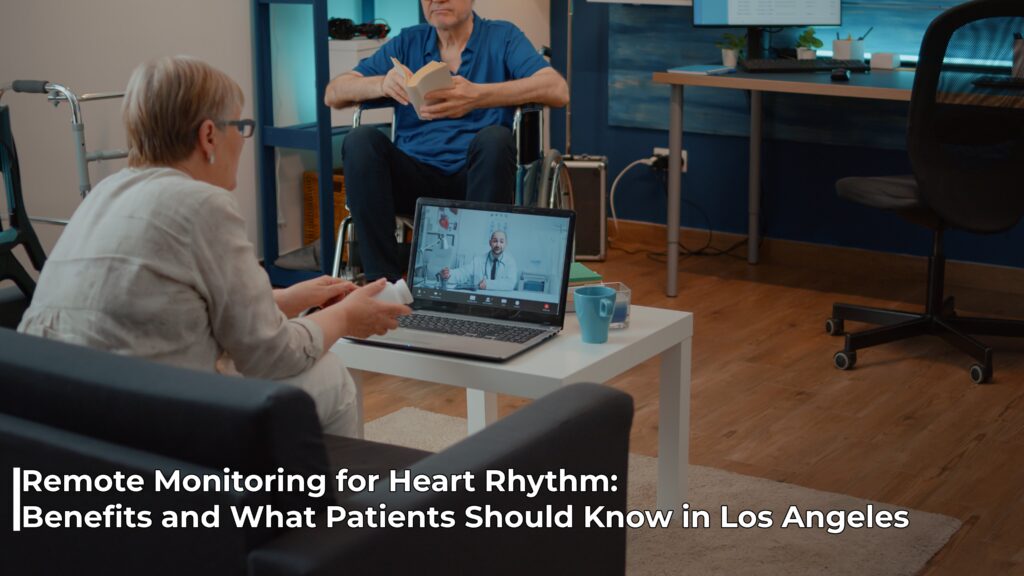
Managing a cardiac rhythm issue often requires continual attention, even when symptoms are not apparent. Patients who deal with the leading electrophysiologist in Los Angeles and experienced heart rhythm experts are adopting remote monitoring to stay in touch with the care team in between office visits. If you have a pacemaker, implantable cardioverter defibrillator (ICD) or implantable loop recorder, or have discussed long-term rhythm monitoring with your doctor, understanding remote monitoring can help you take an active role in managing your heart health.
At the Cardiac Electrophysiology Institute (CEPI), remote monitoring is a routine part of how we follow patients with implanted cardiac devices and those in active diagnostic monitoring. Here is what you need to know.
What Is Remote Heart Rhythm Monitoring?
Remote monitoring refers to transmitting heart rhythm and device data from a patient’s home to their physician’s office without requiring an in-person visit. For patients with implanted devices, the device collects data continuously. That data is sent through a bedside transmitter or a smartphone-based system to a secure clinical server, where our team reviews it.
For patients without an implanted device, remote monitoring may involve a wearable patch monitor or a mobile cardiac telemetry system that sends rhythm recordings on a scheduled basis or in real time. The goal in both cases is the same: to capture rhythm information that a standard office EKG cannot, because that test only records what is happening in the moment.
How Remote Monitoring Works in Practice
Once a patient is enrolled in remote monitoring, the process runs largely in the background. Patients with pacemakers or ICDs typically sleep near a small bedside transmitter that collects device data wirelessly overnight. Transmissions are sent automatically, usually every one to three months, though the schedule can be adjusted based on the patient’s condition.
Our clinical team receives those transmissions and reviews them for any changes in heart rhythm, device performance, battery status, or detected arrhythmia events. If something outside the expected range appears, we follow up directly. Patients do not need to take any additional steps on most transmission nights. Some monitoring platforms also let patients initiate a manual transmission if they experience symptoms and want the data sent right away.
For patients using external wearable monitors, data is collected over a set period (14 to 30 days for a patch monitor, longer for mobile cardiac telemetry) and reviewed after the monitoring window closes, or in real time depending on the system.
Which Patients Benefit Most from Remote Monitoring?
Remote monitoring is particularly well-suited for patients with an implanted cardiac device who need regular device checks without making a trip to the office for every routine review. Patients managing heart failure alongside a rhythm disorder, those with a history of significant arrhythmia events, or those who live at some distance from our practice benefit from the consistency that remote monitoring provides.
Patients in a diagnostic monitoring phase also benefit considerably. An implantable loop recorder (ILR), for example, monitors rhythm continuously for up to three years and transmits automatically, making it possible to document an arrhythmia that would never surface during a standard office visit. For patients with infrequent fainting episodes or suspected but unconfirmed arrhythmias, that extended window changes what is clinically possible.
What Devices Support Remote Heart Rhythm Monitoring?
Several types of cardiac devices and monitoring tools are compatible with remote data transmission.
Pacemakers monitor heart rate and rhythm continuously and detect both slow and certain fast rhythms depending on the model. Remote transmissions include battery life data, lead measurements, and records of any arrhythmia events the device detected. You can learn more about how pacemakers work and when they are used on our pacemaker service page.
ICDs (implantable cardioverter-defibrillators) track fast, potentially life-threatening rhythms and deliver a corrective shock when needed. Remote monitoring lets our team review any shocks the device delivered, confirm whether they were appropriate, and adjust programming remotely on supported platforms.
Cardiac resynchronization therapy (CRT) devices coordinate contractions between the heart’s lower chambers in patients with heart failure. Remote monitoring tracks device function and heart failure indicators that can signal a change in the patient’s status before symptoms become severe.
Implantable loop recorders (ILRs) are small diagnostic monitors placed just under the skin for long-term rhythm surveillance. They are used when symptoms are infrequent and unlikely to be captured in a shorter monitoring window.
Patch monitors and mobile cardiac telemetry systems are worn externally for shorter periods and are used when an implanted device is not yet indicated but extended monitoring is needed.
What Happens When Your Device Sends an Alert?
Not every transmission requires follow-up. Routine transmissions that fall within expected parameters are reviewed, documented, and logged. Patients are typically notified that their transmission was received successfully.
When a transmission includes something outside the expected range, our team reviews the data and contacts you to discuss the next step. For significant events, including a detected or treated arrhythmia, a notable change in device function, or a pattern suggesting the patient’s condition has shifted, follow-up may mean an in-person visit, a medication review, or a remote programming adjustment depending on what the data shows.
Remote monitoring does not mean less oversight. For many patients, it means more consistent oversight than office visits alone can provide.
Remote Monitoring and Your Long-Term Arrhythmia Care
Remote monitoring does not replace in-person care. Regular in-person evaluations remain part of every patient’s plan, particularly for device interrogations requiring direct contact and for assessments that need a physical exam. What remote monitoring does is reduce the gap between those visits.
Arrhythmias do not follow office hours. A rhythm event at 2:00 AM on a Saturday is captured by the device and available for our team to review, even if you never felt it or did not think it was significant enough to call about. That continuity of information allows for better decisions on medication adjustments, device reprogramming, or whether a procedure needs to be reconsidered.
If you are managing a rhythm disorder in Los Angeles and want to understand whether remote monitoring fits your situation, reach out to schedule a consultation. No referral is required.
New patients are welcome. No referral is required.
Frequently Asked Questions About Remote Heart Rhythm Monitoring
Q: Can remote monitoring replace my in-person appointments?
A: No. Remote monitoring supplements in-person care by tracking rhythm and device data between visits. In-person evaluations are still needed for physical exams, direct device interrogations, and clinical assessments that require the physician to be present. The goal of remote monitoring is to improve consistency between those visits, not to eliminate the evaluation process.
Q: Is remote monitoring available for all pacemakers and ICDs?
A: Most modern pacemakers and ICDs are compatible with remote monitoring platforms. Whether a specific device supports remote transmission depends on the manufacturer and model. During your follow-up appointments, our team confirms that your device is enrolled and that transmissions are reaching us as expected.
Q: What should I do if my monitoring system sends me a notification?
A: Follow the instructions that came with your device or monitoring platform. If you are experiencing symptoms alongside an alert, such as palpitations, dizziness, chest discomfort, or shortness of breath, contact our office or seek emergency care depending on the severity. If it is a routine system message confirming a successful transmission, no action is needed beyond noting it.
Q: How quickly will my care team review my remote transmission?
A: Routine transmissions are typically reviewed within one to three business days. Urgent alerts generated automatically by the device or monitoring platform are flagged for faster review. If something in your transmission requires follow-up, we will contact you directly.
Q: Does remote monitoring reduce how often I need to come in for appointments?
A: For stable patients, remote monitoring may reduce the frequency of routine in-person device checks. It does not eliminate in-person visits entirely. Each patient’s schedule is based on their specific condition, device type, and clinical history, and our team determines the right balance of remote and in-person follow-up for each individual.
Q: What is an implantable loop recorder and how does it connect to remote monitoring?
A: An implantable loop recorder (ILR) is a small device placed just under the skin that records heart rhythm continuously for up to three years. It transmits data automatically and is used when symptoms are too infrequent to be captured on a standard Holter or patch monitor. The remote transmission from a loop recorder allows our team to review rhythm data without requiring the patient to come in for each check.
Contact Us
At CEPI, we’re always here to assist you. Whether you have questions about our services, need to schedule an appointment, or would like to learn more about cardiac electrophysiology, our team is here to help.
Office Location: 8631 West 3rd Street #710E, Los Angeles, CA 90048
Phone: (310) 746-5335
Office Hours:
- Monday to Friday: 8:00 AM–5:00 PM
Get in touch today! Prefer to reach out online? Fill out our contact form, and a member of our team will get back to you promptly.
Related Topics: